Mon – Sat: 9:00 AM – 7:00 PM IST

Offline Mobile App Development — apps that work with no signal

Offline is not a feature you add. It is a decision about where the truth lives.

A medical representative in a waiting room, a picker in a steel-clad warehouse, an engineer in a basement plant room. Their work does not stop when the bars do, and an app that spins a loader is an app they stop using. Offline-first changes the data model, the sync, the conflict rules and the testing — which is why retrofitting it costs more than building it.

Free Proof of Concept Sync and conflict rules designed in sprint one Tested on real devices, not just a simulator
The decision

Offline is where the truth lives, not a setting you switch on

Most apps treat the server as authoritative and the device as a window onto it. Offline-first inverts that for the duration of the user’s work: the device holds the truth about what they have just done, and the server finds out afterwards. That inversion reaches into the data model, the state management, the API design and the testing strategy, which is why it is a decision made in the first sprint or paid for twice.

  • Every write succeeds locally and immediately, with no spinner and no network dependency
  • A durable queue survives the app being killed, the phone restarting and the battery dying
  • Conflict rules are defined per entity, in writing, before any code is written
  • The user interface shows sync state honestly rather than pretending everything is saved
  • The API is designed for reconciliation, not just for request and response

The tell for a retrofit is a loading spinner that appears where a cached value should have been.

Who needs it

Four workforces that decide this for you

Field sales and medical reps

A call is logged in a waiting room, a basement clinic or a rural town. The visit is the product; losing it to a dropped connection loses the day’s work and the rep’s trust in the tool.

Warehouse and yard

Steel racking, concrete and metal-clad buildings are hostile to wireless. A picker who has to walk to the office door for a signal is a picker who writes on paper instead.

Service engineers

Plant rooms, lift shafts, basements and remote sites. Job sheets, photos and signatures are captured where there is no coverage and uploaded hours later.

Logistics and last mile

Proof of delivery at a door with one bar. The signature and the photograph must be captured locally and reconciled afterwards, or the delivery is disputed.

Architecture

The four pieces, in the order they have to be decided

Local storage, chosen for the queries you will actually run

Relational data with filtering, sorting and joins belongs in SQLite behind a typed layer. Simple documents belong in a lighter embedded store. What matters more than the choice is keeping the sync layer ignorant of it, so the storage can change without the sync changing.

A durable outbound queue

Every change the user makes becomes an entry that survives the process being killed. Entries carry their own identity so a retry cannot create a duplicate, and they replay in an order that respects dependencies — the parent record before the child that points at it.

Conflict rules, per entity

Write them down as a table before writing code: entity, strategy, who wins, and what the user sees if it cannot be decided. Last-write-wins for a note. Server-authoritative for anything with money. Field-level merge where edits are naturally disjoint. Explicit human resolution where a silent merge would be a data error.

Partial sync, scoped to the user

Nobody needs the whole database on a phone. Sync what this user needs for the territory, the route or the shift, with a window that rolls forward. This is usually the difference between a first sync measured in seconds and one measured in minutes.

Failure modes

What breaks when the signal returns

These are the bugs that reach production, because they do not happen on a developer’s desk.

The expired token

The user worked offline for two days; the access token died on day one. The queue fires, every request returns 401, and a naive implementation discards the work. The queue must pause, refresh and resume rather than fail.

Replay out of order

A visit is created and then edited. If the edit syncs first, the server has an update for a record that does not exist. Dependency ordering in the queue, not timestamps, is what fixes this.

The invisible duplicate

The request reached the server, the response did not reach the phone. Without a client-generated identity the retry creates a second record, and somebody reconciles it by hand.

The wrong clock

Device clocks drift and users change them. Any conflict strategy that trusts the device timestamp will eventually resolve in favour of the wrong edit. Sequence on the server.

The queued photograph

Media is large, slow and the first thing to fail on a weak connection. Queue files separately from data, upload in the background, and never block the record on its attachment.

Honesty

Showing sync state without alarming anyone

The worst offline user interface is the one that says nothing, because the user cannot tell the difference between saved and lost. The second worst is the one that shouts, putting a red warning on every screen whenever the signal drops — users in genuinely low-coverage work learn to ignore it within a week. What works is quiet, specific and always available.

  • Confirm the local save immediately and plainly — the work is safe, that is what the user needs to know
  • Show a small, persistent indicator of how many items are waiting, not a modal
  • Make the queue inspectable, so a supervisor can see exactly what has not reached the server
  • Surface genuine conflicts to a person, with both versions, rather than resolving them silently
  • Never show an error for a condition the user cannot do anything about
In practice

Screens where local state is doing the work

Consumer apps face a milder version of the same problem a field app does: the network comes and goes mid-task, and the user must not lose anything. These are screens from two shipped apps where that mattered. Tap any image to enlarge it.
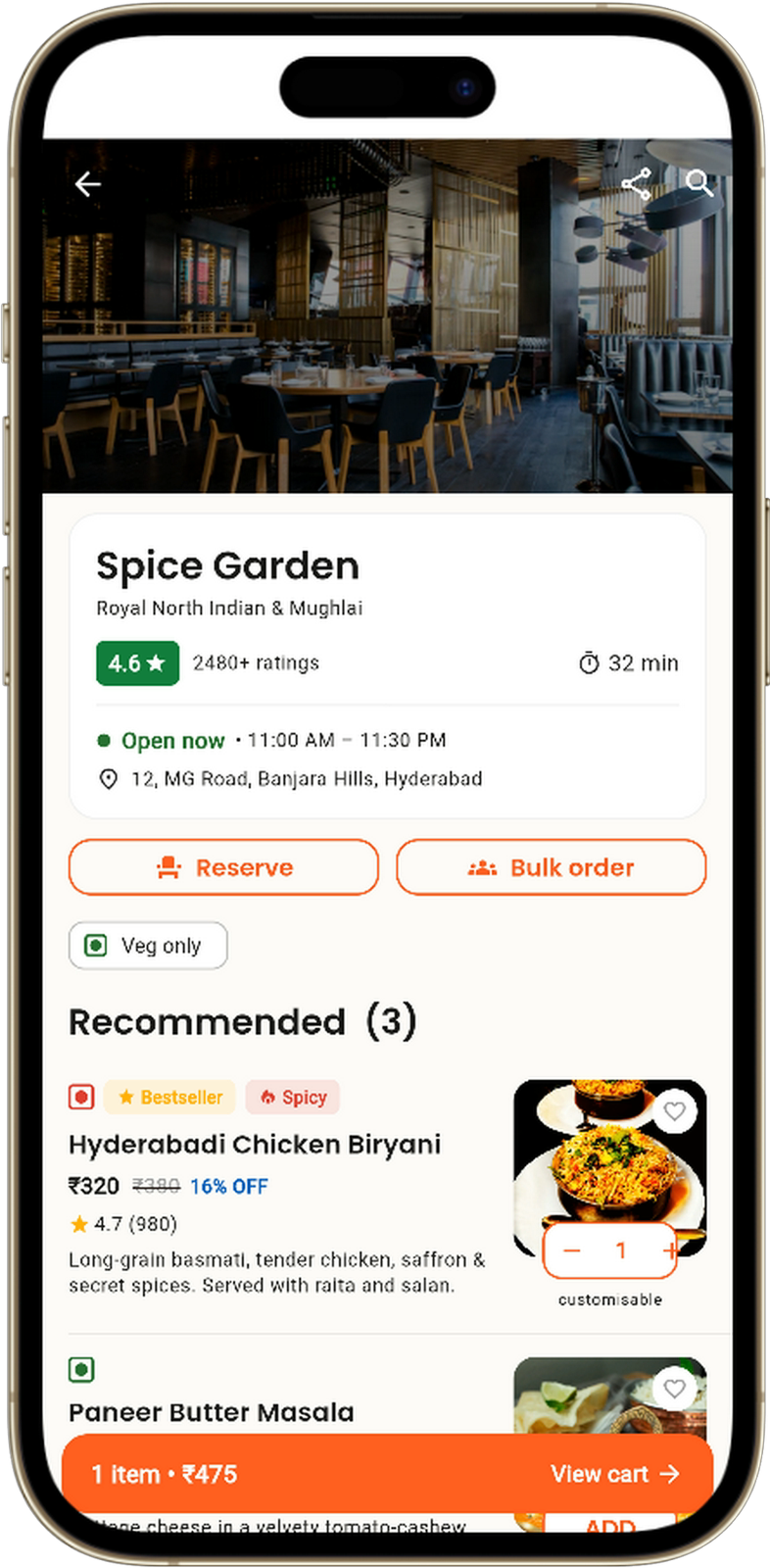
Menu screen with a cart bar that persists across navigation
A cart that survivesThe basket is held locally and reconciled with the server, so backgrounding the app, losing signal or switching networks does not empty it.
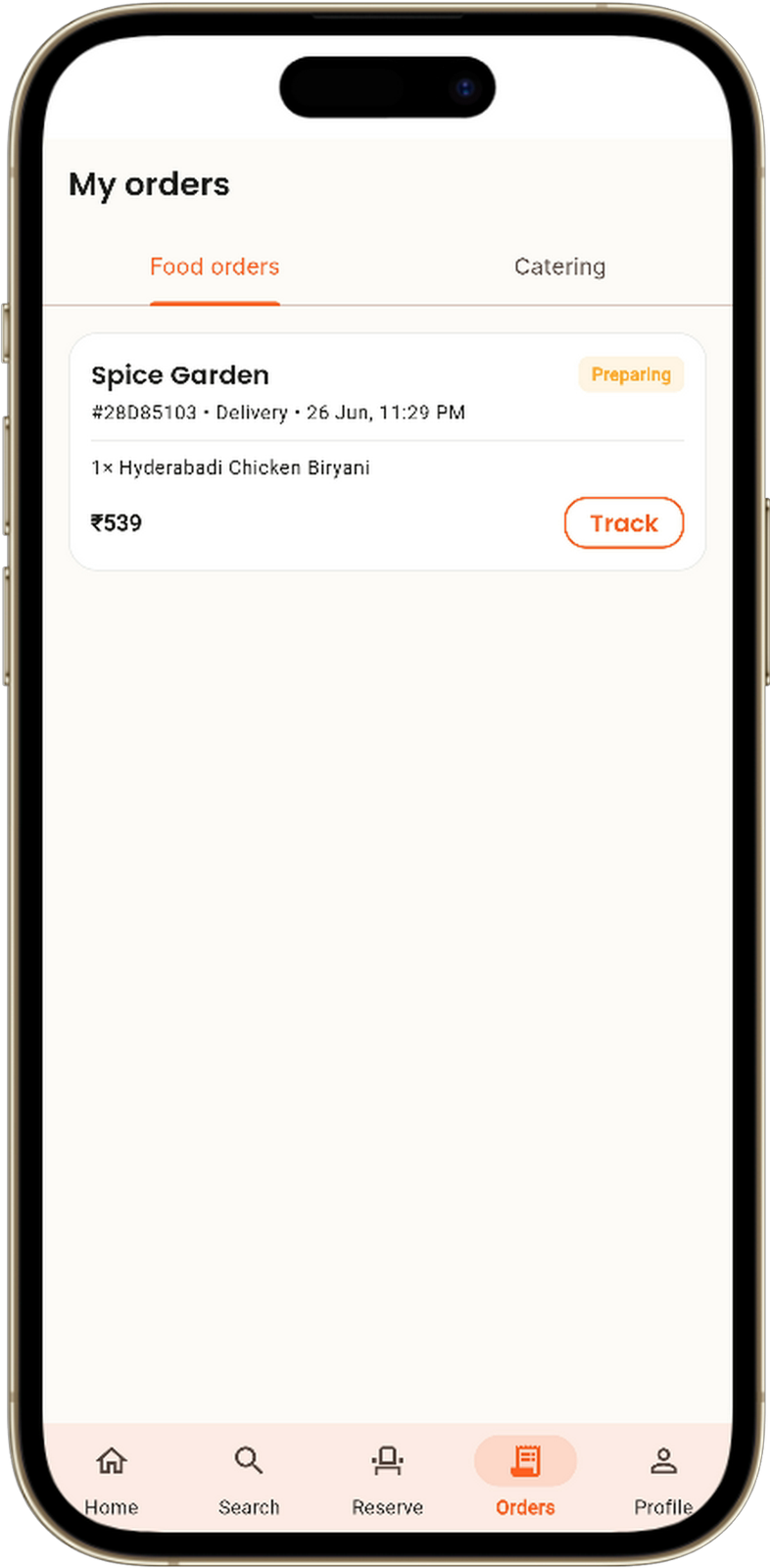
Order history list in a food ordering app
Order history, readable offlinePast orders cached on the device. The user can check what they ordered last week in a lift with no signal, which is where they usually want to.
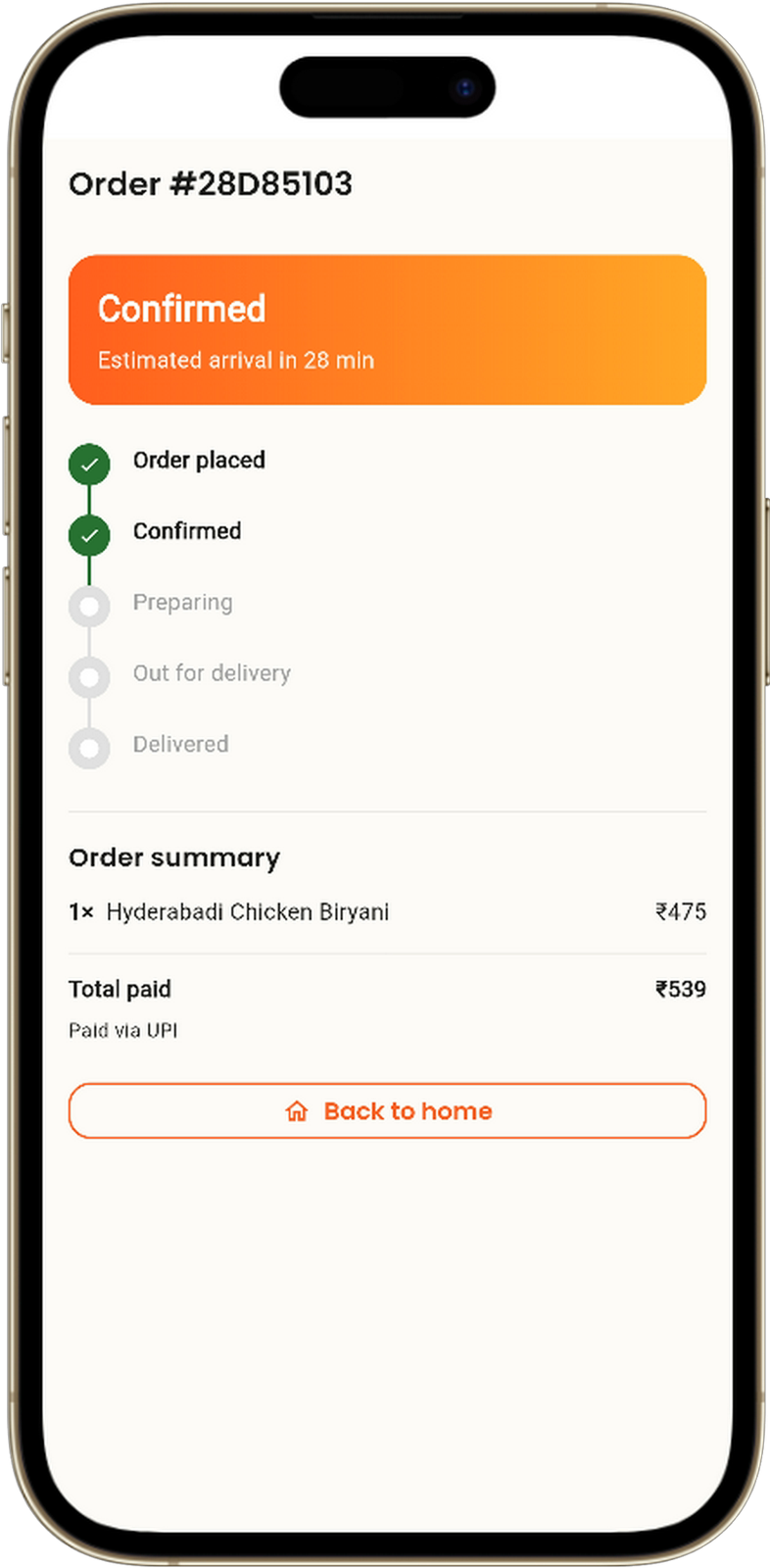
Live order tracking screen showing delivery progress
Live tracking, degrading honestlyWhen updates stop arriving the screen says so and shows the last known position, rather than spinning or pretending the order is stationary.
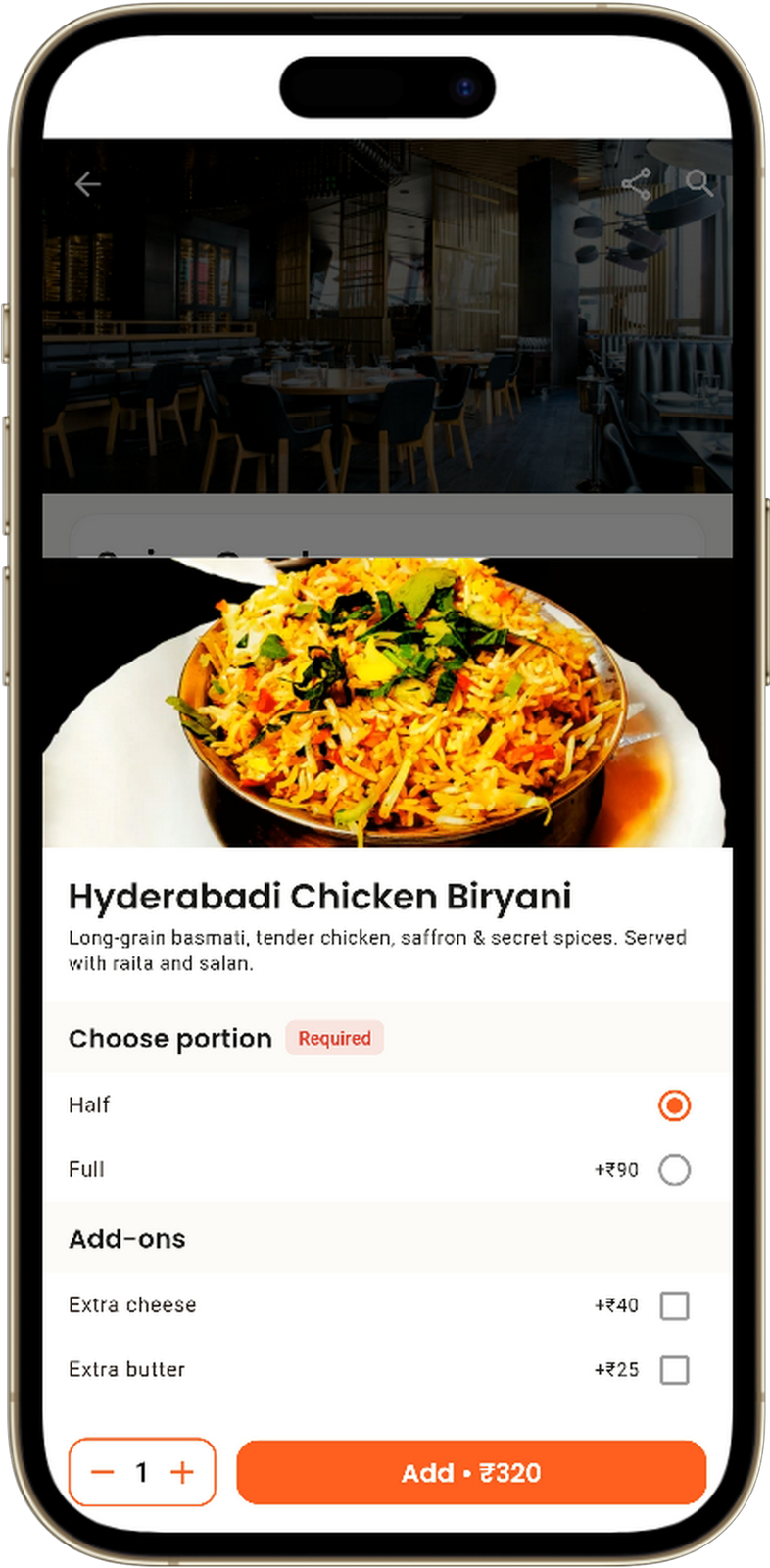
Item customisation screen with options and add-ons
Choices held before they are sentItem customisation recorded locally the moment it is made. Nothing waits on a round trip, so nothing is lost if one fails.
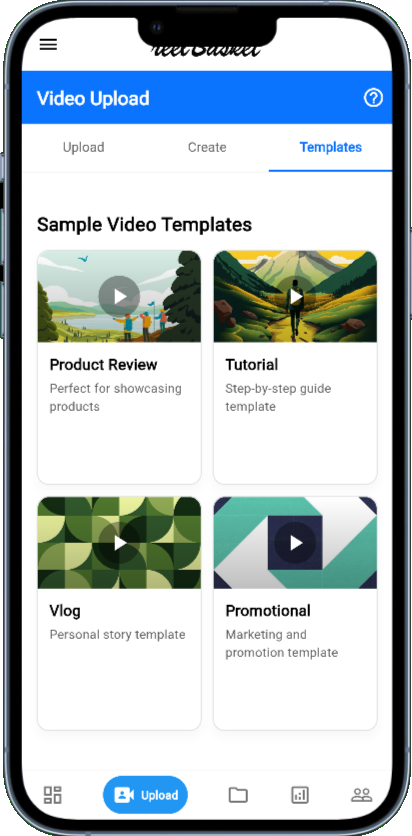
Content upload screen in a social commerce app
Upload queued, not blockedMedia is the first thing a weak connection fails. The post is created immediately and the file uploads behind it, so the user is never held at a progress bar.
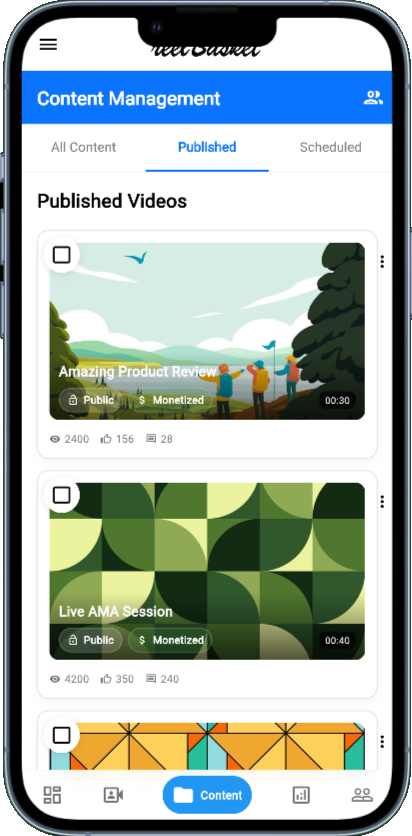
Content management screen listing drafts and published posts
Drafts that outlive the sessionWork in progress stored on the device. The app being killed by the operating system is a normal event, not a data loss event.
Questions

Frequently asked questions about offline mobile app development

That the device is the primary source of truth for the user's own work, and the server is something it reconciles with later. Every read and write goes to local storage first and succeeds there. Synchronisation is a background process the user never waits for. An app that caches responses for convenience is not offline-first - it is an online app that degrades.
Sometimes, and it is rarely cheap. If the app assumes a request-response cycle in its screens, making it offline-first means rewriting the data layer and usually the state management with it. Budget for something closer to a rebuild of the internals than a feature. This is the single strongest argument for deciding offline at the start.
For structured relational data with real query needs, SQLite through a typed wrapper remains the default and is hard to beat. For simple key-value or document storage, an embedded store is lighter and faster to build against. The choice matters less than committing to one and keeping the sync layer independent of it.
By deciding the rule per entity rather than globally. Last-write-wins is fine for a free-text note and dangerous for a stock count. Server-authoritative suits anything with money attached. Field-level merging works where edits rarely touch the same field. Some records should simply refuse to merge and ask a human - the mistake is picking one strategy for the whole app.
Authentication first - the token expired while offline and the sync queue fires with a dead credential. Then ordering, because a queue replayed out of sequence can create a child record before its parent. Then duplicates, when a request succeeded on the server but the response never arrived. All three are predictable, and all three need designing for.
Not with aeroplane mode alone. That tests the clean case, and the clean case is not what hurts. You need deliberate simulation of slow and lossy networks, a connection that drops mid-request, a device whose clock is wrong, a queue that has been building for three days, and two devices editing the same record before either syncs.
Done carelessly, yes - a polling loop and a wake lock will do it. Done properly it usually improves battery life, because the app stops making network calls on every interaction. Sync in batches, on a sensible trigger, and let the operating system schedule background work.
Keep reading

Where to read next

Choosing an app development company

What to check before you sign, who owns the accounts and the code, and what the handover must contain.

Cross-platform app development

Whether one codebase suits an app this demanding, and where it stops being the right answer.

Warehouse and 3PL software

The systems these field apps usually talk to, and why the sync contract matters at both ends.

ePharma field sales CRM

An offline-first field application in production: calls, samples, RCPA and tour plans.

Describe the Worst Signal Your Users Work In

We will prototype the sync and conflict handling for it, free, before you commit to a build.