Portals, dashboards and multi-tenant SaaS — built on Java, Spring Boot and React.
Off-the-shelf software covers the common eighty per cent. The remaining twenty is usually where your actual competitive advantage lives — and where spreadsheets, email chains and manual workarounds quietly accumulate. We build the web applications that close that gap: customer portals, internal operations tools, dashboards and multi-tenant SaaS products.
The most expensive custom software is the kind that rebuilds what you could have configured — and the most expensive spreadsheet is the one running a process nobody has time to automate.
We start by drawing the line: what should sit in a packaged system, what genuinely needs building, and what should not exist at all. Then we build the part that matters — a customer portal that removes a queue of emails, an operations tool that replaces a shared workbook, a dashboard that answers the question your leadership asks every Monday, or a multi-tenant SaaS product you intend to sell. Working software lands in your hands every sprint, so direction changes cost days rather than months.
Underneath, we build on stacks we support long term: Java and Spring Boot for services, React and Flutter Web for interfaces, PostgreSQL for data, containerised and deployed to AWS or Azure with CI/CD and zero-downtime releases. Because we also build ERP and CRM systems, your application integrates with the systems you already run rather than becoming another island. Full source code ownership is available, so nothing about this arrangement traps you.
From product definition through build and launch to the enhancement backlog afterwards.
Requirement workshops, wireframes, clickable prototypes and a design system before production code begins.
Java, Spring Boot, React and Flutter Web built in sprints with a working demo at the end of each.
Containerised deployment to AWS or Azure with CI/CD pipelines, monitoring and zero-downtime releases.
Monitoring, security patching, performance tuning and a maintained enhancement backlog after launch.
The capabilities that separate a working demo from an application your business can depend on.
Robust, well-understood services that are still maintainable in year five.
Component-driven interfaces built from a shared design system.
One interface that works on desktop, tablet and phone.
Tenant isolation, subscription plans and per-tenant configuration.
Relational data modelled properly, indexed and backed up.
Role-based access, encryption, OWASP hardening and audit logging.
REST and GraphQL connections to your ERP, CRM and third-party services.
Dashboards, scheduled reports and Excel or PDF exports.
Email, SMS and WhatsApp alerts driven by business rules.
Automated builds, tests and zero-downtime deployments.
Caching, query tuning and load testing before users find the limits.
Natural-language search and assistants where they earn their place.
We combine deep delivery expertise with an affordable delivery model so you capture measurable results — without overspending.
Real screens from web applications and portals we designed, built and deployed for clients. Click any screen to view it full size.
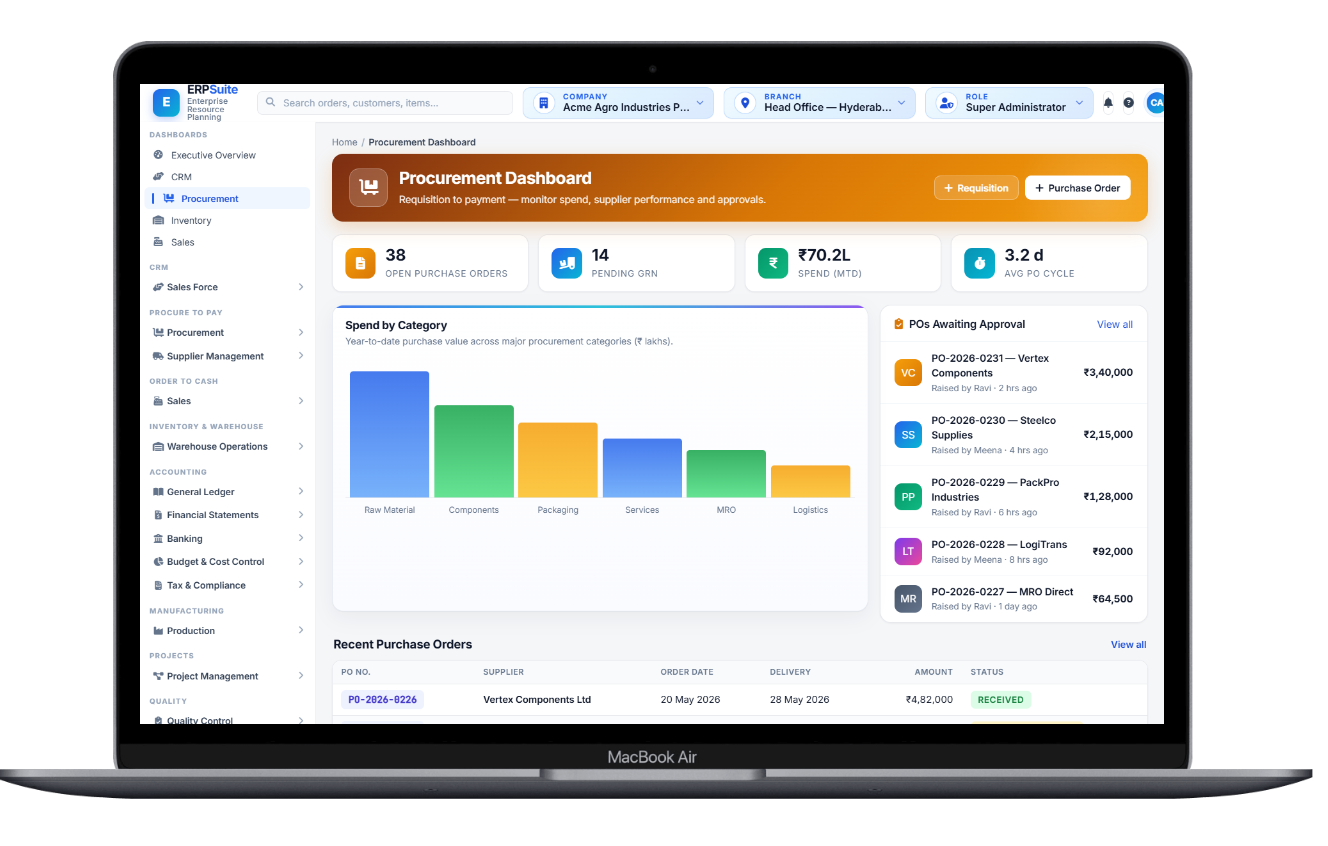
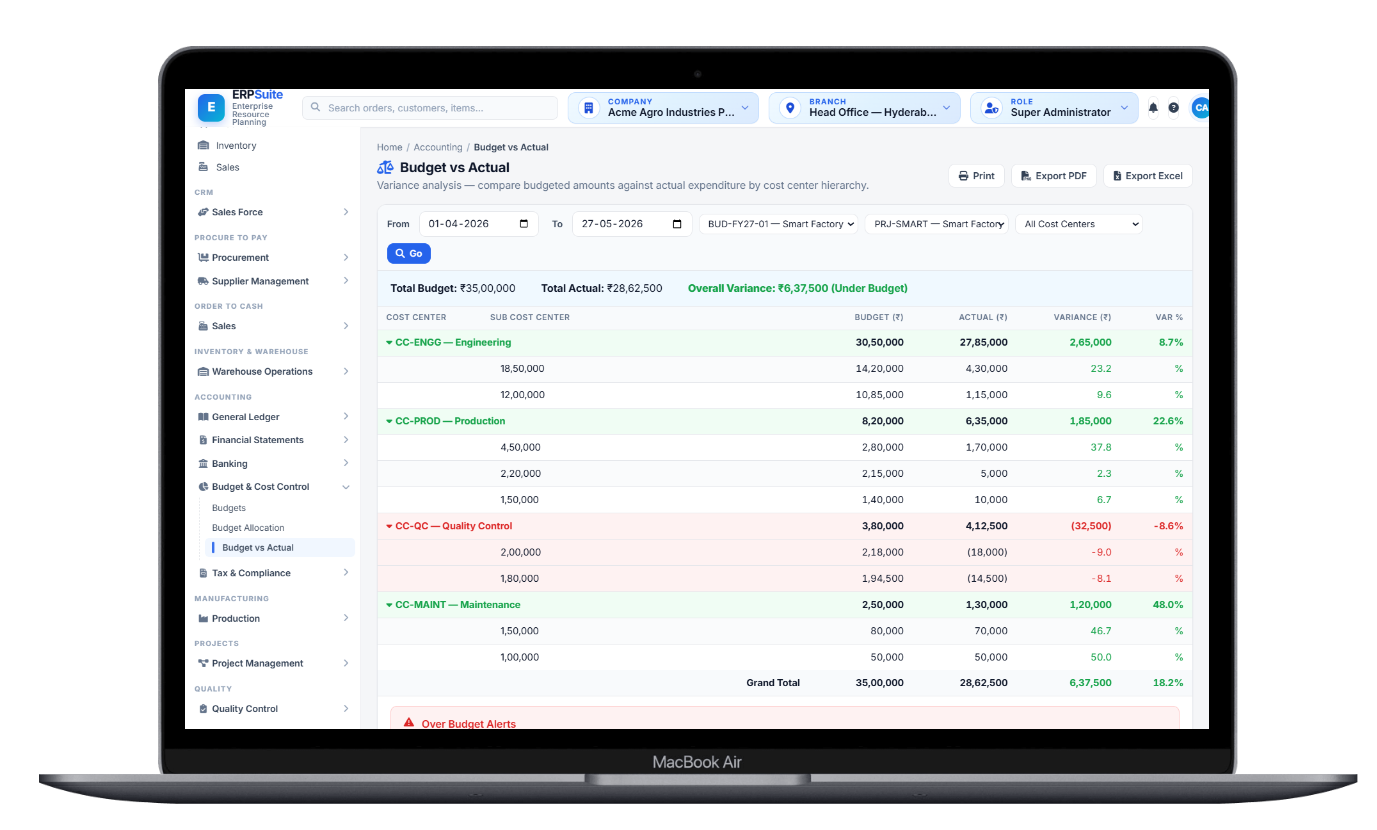
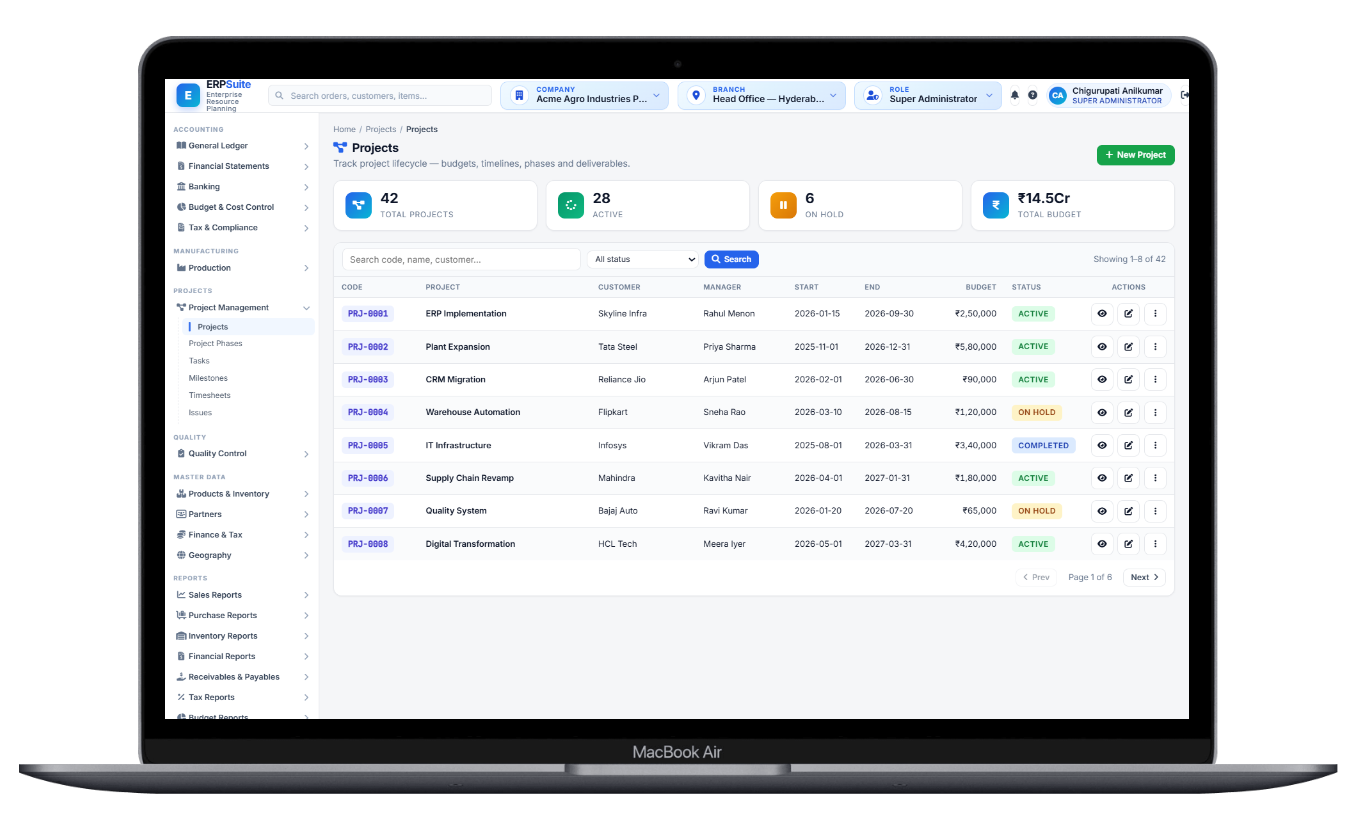
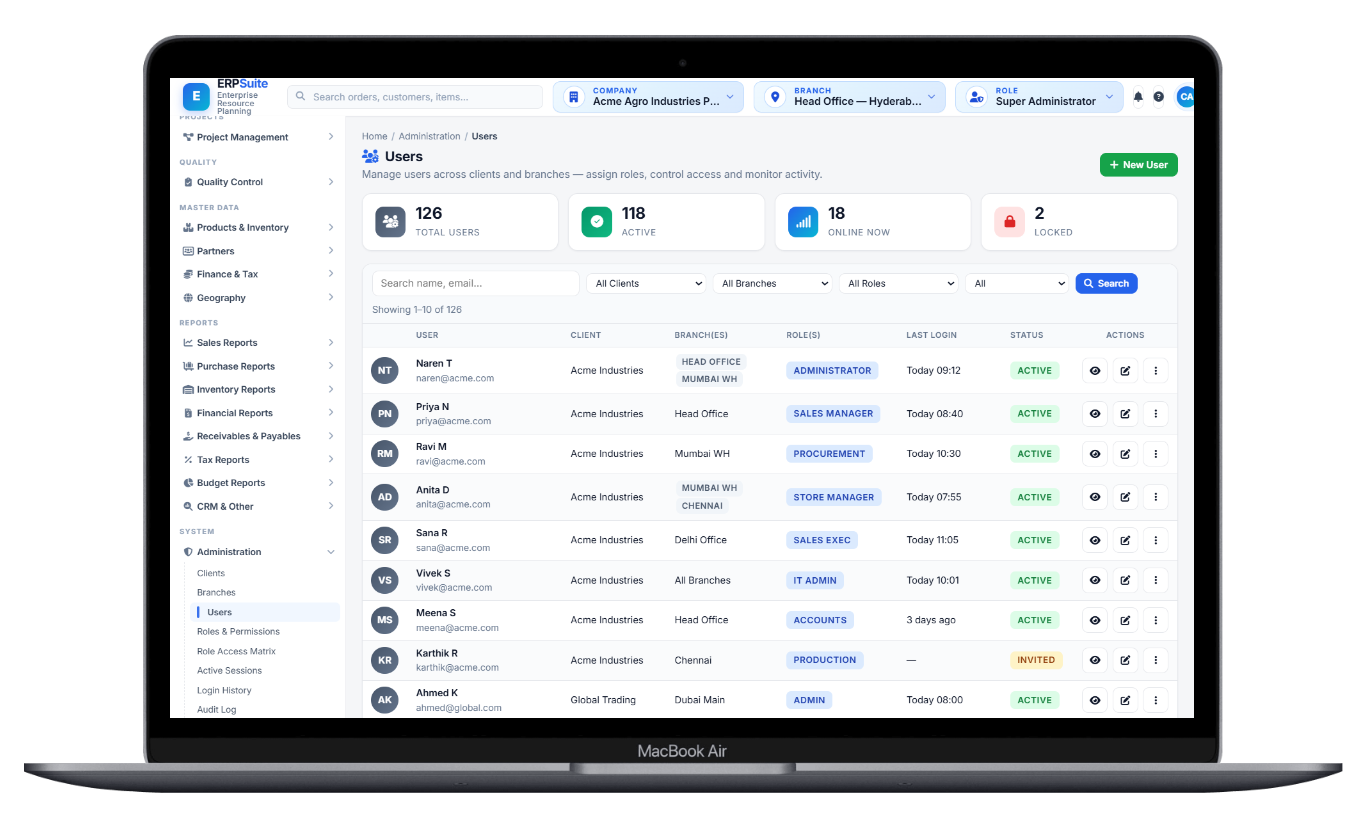
"We go beyond writing code to ensure your application earns its place in the working day. With portals, dashboards and SaaS products delivered across logistics, manufacturing, pharma and education, our team blends product thinking, Java engineering and cloud operations. From a free working prototype to long-term support, we focus on creating sustainable value at every stage. Partner with us to build the twenty per cent that actually differentiates you."
Every stage is visible to you, with working software in your hands each sprint — so feedback arrives while it is still cheap to act on.
Goals, users and the scope of release one
Wireframes, prototype and design system
Application and APIs built together each sprint
Automated tests, UAT and performance runs
Cloud release with CI/CD and monitoring
Patching, tuning and the enhancement backlog
We build custom applications across industries — each with its own users, workflows and integration demands.
Customer portals, order visibility and proof of delivery.
Production tracking, quality capture and supplier portals.
Storefront back-ends, catalogue tools and fulfilment consoles.
Field reporting, compliance records and territory dashboards.
Student portals, admissions workflows and campus systems.
Appointment portals, records access and referral workflows.
Onboarding journeys, document capture and advisor consoles.
Site reporting, progress claims and subcontractor portals.
Timesheets, utilisation dashboards and client portals.
Booking engines, guest portals and operations consoles.
Asset registers, inspection workflows and compliance reporting.
A funded-ready first release built without painting you into a corner.
Different problems, one engineering approach — built to integrate, documented to maintain, and yours to own.
Whether it faces your customers, your staff or your leadership, the engineering discipline is the same: a documented API layer, a shared design system, automated tests and a deployment pipeline. That consistency is what makes the second and third application cheaper than the first.
Self-service for your customers — orders, documents, tracking and support — connected live to the systems behind them.
The system that finally replaces the shared workbook, with approvals, audit trails and real permissions.
One place answering the questions leadership asks weekly, drawn live from source systems.
A product you sell — tenant isolation, subscription plans, onboarding and billing built in from the start.
An application is only as useful as the data behind it. We connect yours to the systems you already run — through documented, secure APIs.
If the system your application needs has no usable API, we build the service layer alongside it — on Java and Spring Boot — with authentication, rate limiting and retry handling built in, and every exchange logged for audit and troubleshooting. You end up owning both halves, documented and testable, rather than depending on a black box.
Because building software is easy; building software people still rely on in year three is not.
Forms and filters are dead UX. We embed an AI conversation layer into the systems we ship — so your people get answers, charts and actions in seconds, without learning your menu tree.
User: Which open support tickets are breaching SLA today?
AI: Four tickets past target — here they are by age.
User: Assign them to the on-call engineer and notify the customers
AI: Done — reassigned and acknowledgement emails sent to all four customers. Open the queue →
Every system we build now ships with an optional AI assistant that reads your real data — orders, tickets, usage, documents — and answers in natural language. No new tab, no separate chatbot tool. Just a conversation, where the work happens.
Behind the scenes we also build with Claude — pairing it on architecture, code generation, test writing and migrations. The same AI that writes our code now lives inside your system to serve your team.
Your user types — or speaks — a plain English question or instruction inside your app.
It understands the request, pulls exactly the right information, and stays within each person's access.
The answer lands as a chart, table, summary or one-click action — right inside your app, not in a side panel.
NDA-first · 30-minute strategy call · we ship a working prototype in two weeks
Your product concept, designs and source code are the most valuable things you will share with a development partner. We protect them with legally binding agreements from the first conversation.
Every engagement starts with a signed NDA — before any discovery call, demo or data exchange. Your product idea, designs and data stay confidential.
You own 100% of the source code and intellectual property. No vendor lock-in, ever.
We build trust through transparency, reliable delivery, and ongoing support that grows with you.
We deliver a working Proof of Concept before any financial commitment. Use a real build with your own data, click through your own workflow, and decide with confidence — no upfront charges, no lock-in contracts.
We build a functional prototype of your core workflow — running on a real URL with your own data — in just 2-3 weeks, completely free of charge.
Get full source code and IP ownership of your project for an additional fee. No vendor lock-in — you control your software.
Not satisfied? Walk away with zero obligation. No penalty, no questions asked. The POC is yours to keep either way.
We don't believe in trapping clients. Flexible engagement models — fixed price, T&M, or dedicated team. You choose.
Ready to see your application come to life — for free?
Schedule Free ConsultationNo credit card required • No commitment • Response within 24 hours
Let us turn your process into a working application your team will use every day.
